Avicularia avicularia M6 (Metallic Pink-Toe)
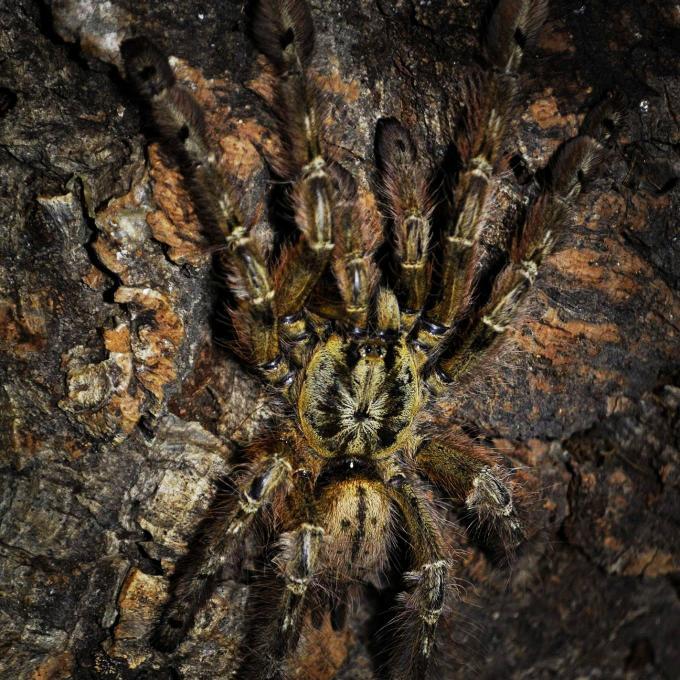
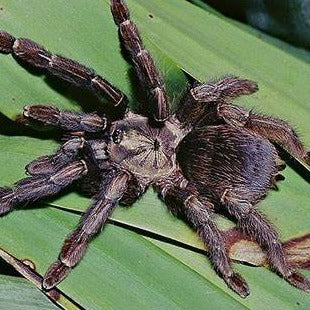
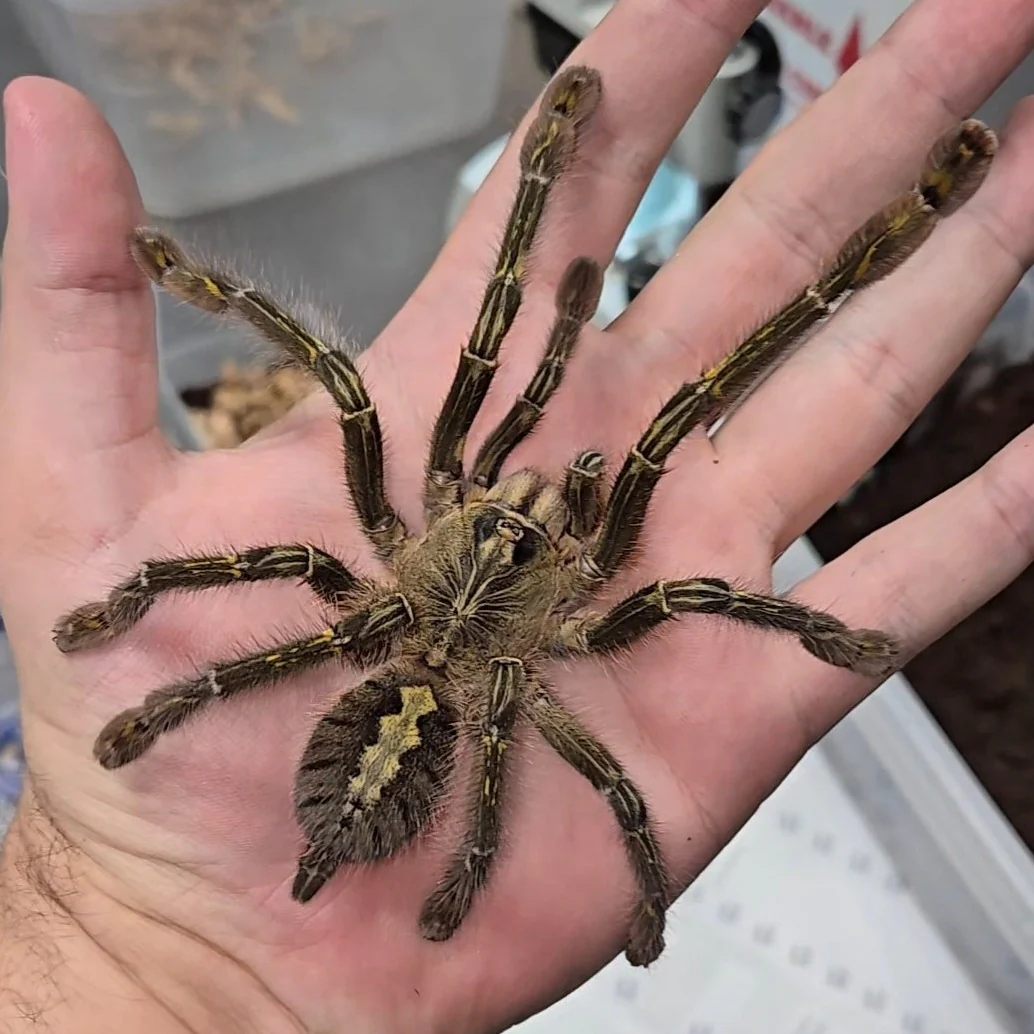
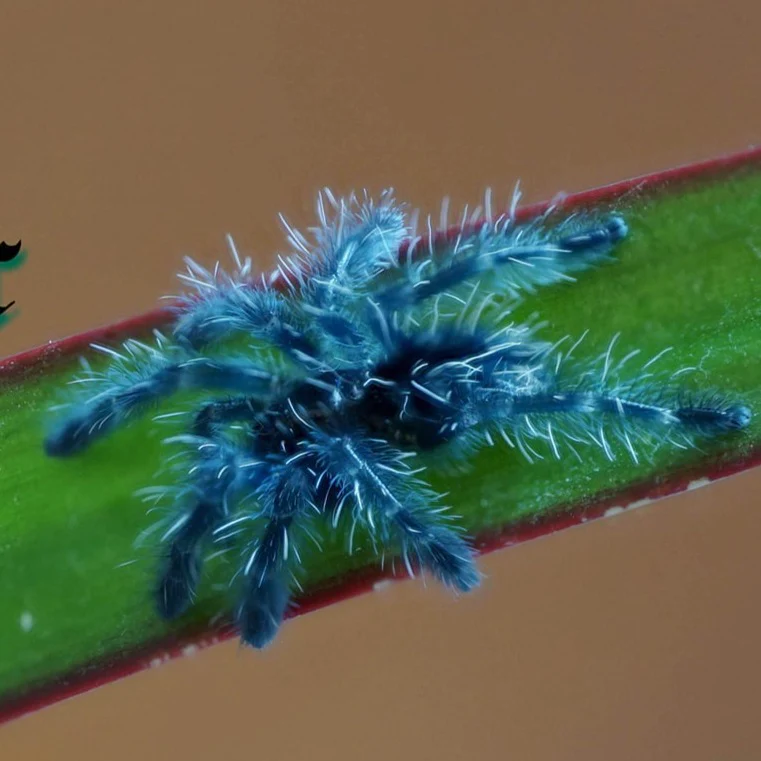
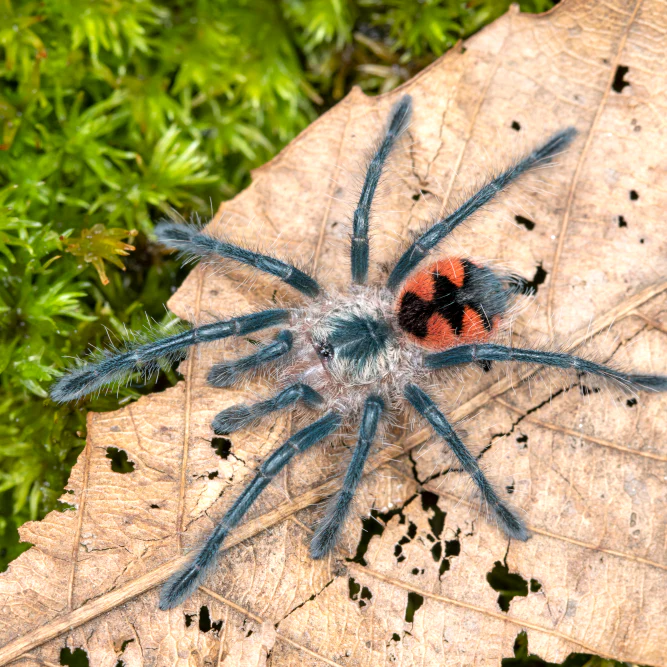
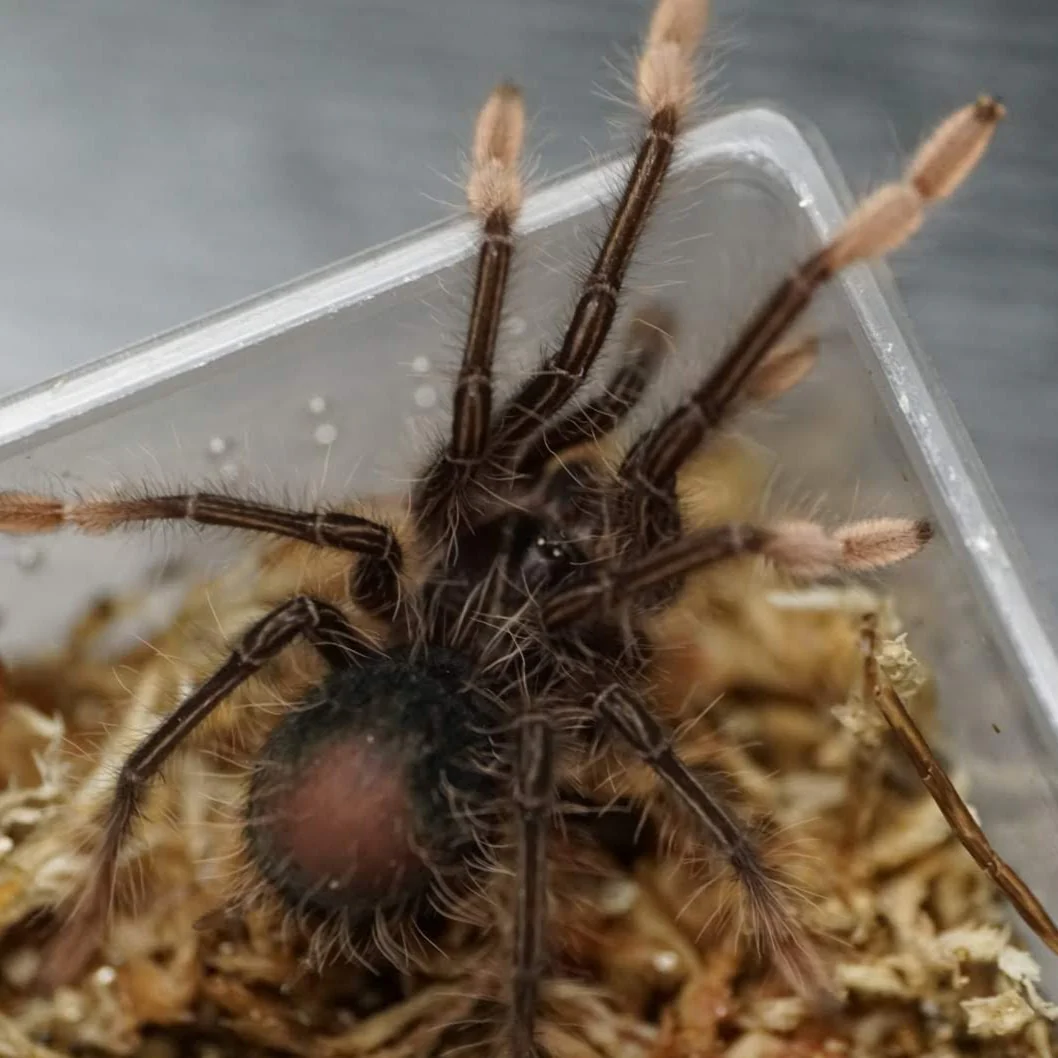
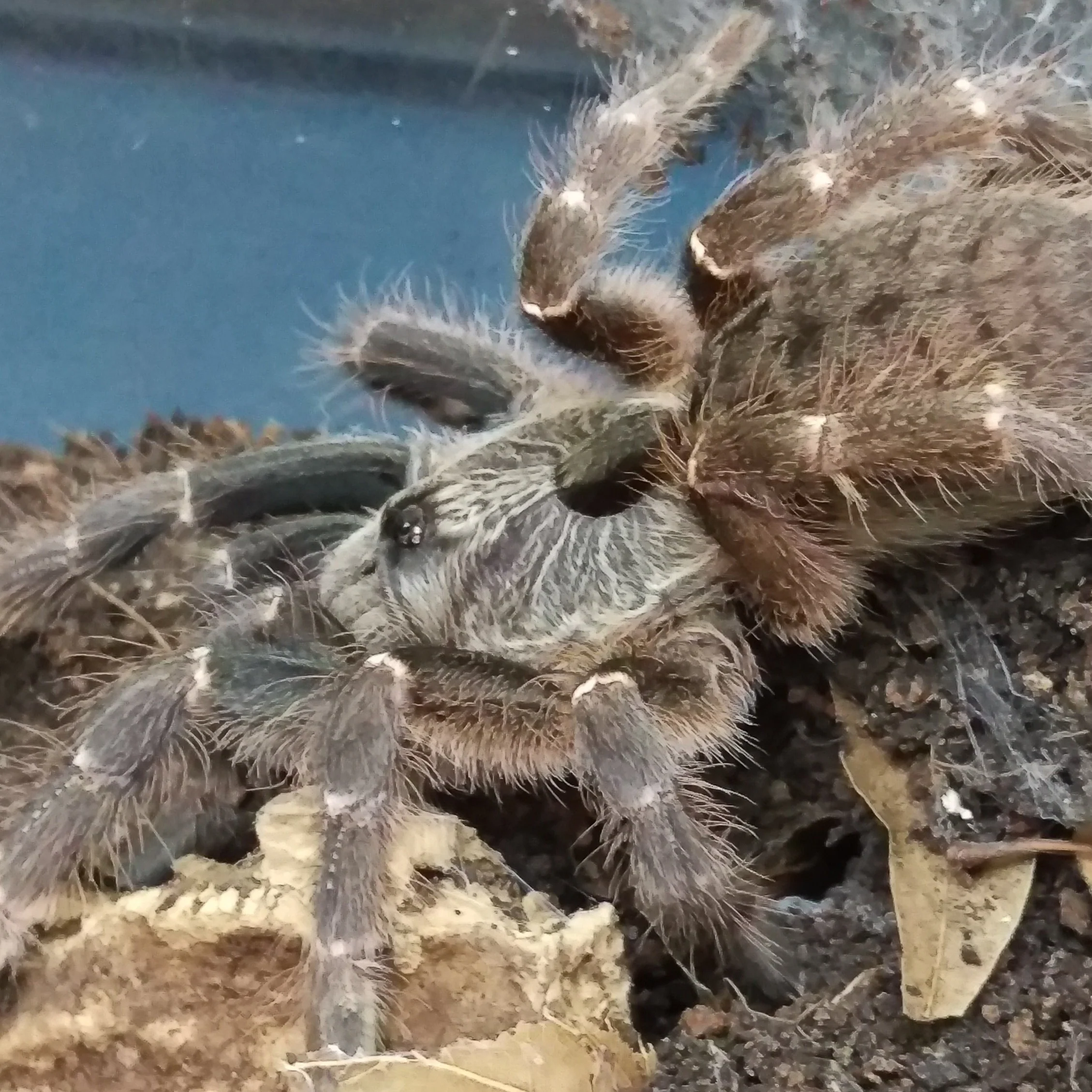
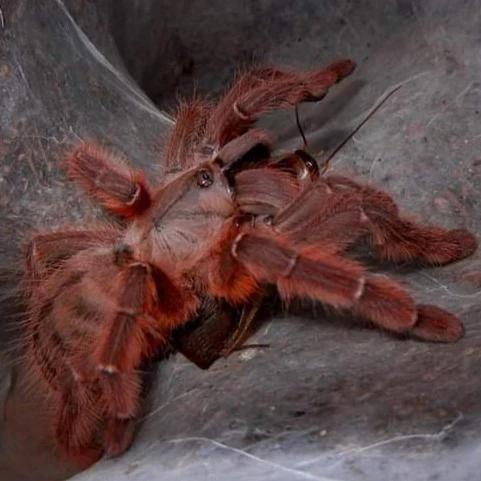
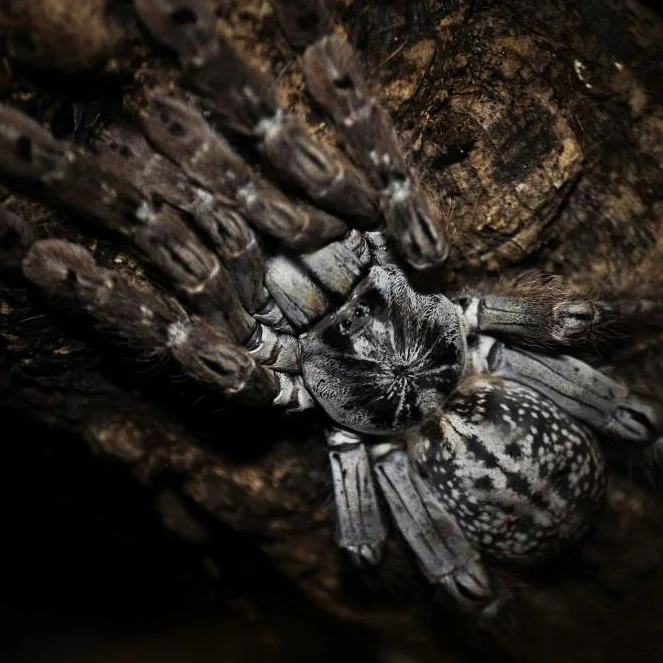
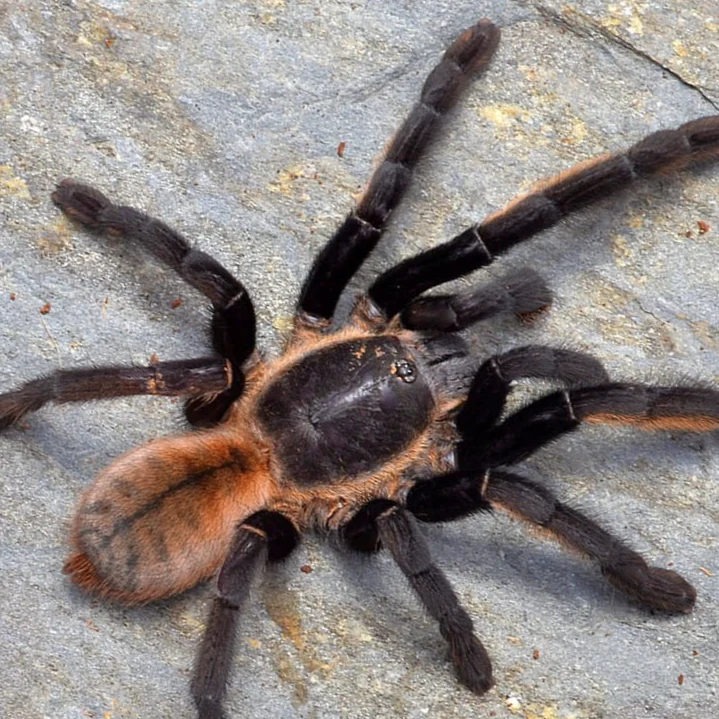
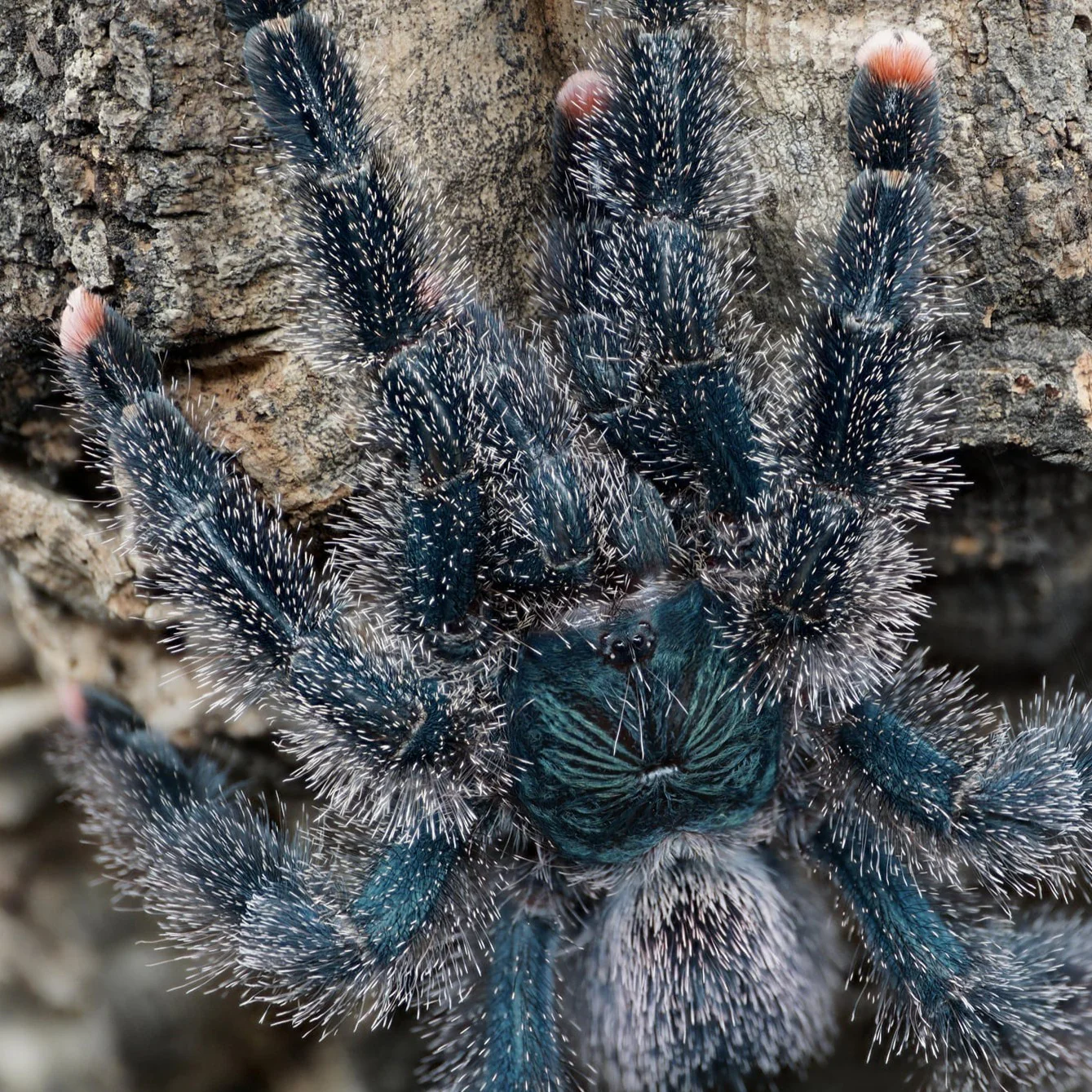
The Giant Metallic BluePinktoe Tarantula, Avicularia avicularia morphotype 6 is a beautiful arboreal theraphosid that ranges from Guyana, French Guiana, Venezuela, Trinidad & Tobago, Suriname, and Brazil. This strain is a hobby classic that goes by several names. A. avicularia was originally described by the naturalist Carolus Linnaeus in 1758 and Morphotype #6 is distinct from all other A. avicularia strains in captivity in several ways. Most conspicuously, this strain reaches an impressive size [~6.75” leg span in mature females] and has a signature frosted appearance because all of their setae are highly grizzled. Additionally, the carapace and femurs are lighter blue and the abdominal guard setae are brownish-gray, rather than red as in the typical of the standard Guyana Pinktoe (A. metallica Morphotype #1).
This species can be maintained similarly to other pinktoe tarantulas. They fare best in arboreal setups with ample cross ventilation. A vertical cork slab propped or attached to the side of the container works well for adults. Their substrate should be maintained as only slightly moist during the spiderling and juvenile stages to dry as they gain size. It has been observed that Avicularia are particularly sensitive to excessive moisture and humidity, so misting a corner of the cage away from the spider occasionally and/or having a water dish should provide sufficient humidity for these spiders.
Avicularia are docile in nature but are quite agile and do possess Type II urticating hairs, which can rub off onto ones’ skin during handling. Although A. avicularia and most other species in this genus lack the urticating hair types that can be flinged into the air, these tarantulas, like seabirds, can squirt their excrement several feet toward a perceived threat. These beauties, therefore, can be handled but are best enjoyed from a distance. A. avicularia morphotype #6 is a fantastic, large Pinktoe and a must for those who love colorful arboreals.
References:
https://tarantulaspiders.com/species-profiles%2Fservices/ols/products/avicularia-avicularia-morphotype-number-1-guyana-pinktoe
Cooke, J. A. L., V. D. Roth & F. H. Miller. 1972. The urticating hairs of theraphosid spiders. American Museum Novitates 2498: 1–43. Online at http://hdl.handle.net/2246/2705
Linnaeus, C. 1758. Systema naturae per regna tria naturae, secundum classes, ordines, genera, species cum characteribus differentiis, synonymis, locis. Holmiae, 821 pp. (Araneae, pp. 619-624)
https://www.tarantupedia.com/aviculariinae/avicularia/avicularia-avicularia
https://arachnoboards.com/threads/avicularia-morphotype-identification.337729/

Product Information
Product Information
Shipping & Returns
Shipping & Returns
Description
The Giant Metallic BluePinktoe Tarantula, Avicularia avicularia morphotype 6 is a beautiful arboreal theraphosid that ranges from Guyana, French Guiana, Venezuela, Trinidad & Tobago, Suriname, and Brazil. This strain is a hobby classic that goes by several names. A. avicularia was originally described by the naturalist Carolus Linnaeus in 1758 and Morphotype #6 is distinct from all other A. avicularia strains in captivity in several ways. Most conspicuously, this strain reaches an impressive size [~6.75” leg span in mature females] and has a signature frosted appearance because all of their setae are highly grizzled. Additionally, the carapace and femurs are lighter blue and the abdominal guard setae are brownish-gray, rather than red as in the typical of the standard Guyana Pinktoe (A. metallica Morphotype #1).
This species can be maintained similarly to other pinktoe tarantulas. They fare best in arboreal setups with ample cross ventilation. A vertical cork slab propped or attached to the side of the container works well for adults. Their substrate should be maintained as only slightly moist during the spiderling and juvenile stages to dry as they gain size. It has been observed that Avicularia are particularly sensitive to excessive moisture and humidity, so misting a corner of the cage away from the spider occasionally and/or having a water dish should provide sufficient humidity for these spiders.
Avicularia are docile in nature but are quite agile and do possess Type II urticating hairs, which can rub off onto ones’ skin during handling. Although A. avicularia and most other species in this genus lack the urticating hair types that can be flinged into the air, these tarantulas, like seabirds, can squirt their excrement several feet toward a perceived threat. These beauties, therefore, can be handled but are best enjoyed from a distance. A. avicularia morphotype #6 is a fantastic, large Pinktoe and a must for those who love colorful arboreals.
References:
https://tarantulaspiders.com/species-profiles%2Fservices/ols/products/avicularia-avicularia-morphotype-number-1-guyana-pinktoe
Cooke, J. A. L., V. D. Roth & F. H. Miller. 1972. The urticating hairs of theraphosid spiders. American Museum Novitates 2498: 1–43. Online at http://hdl.handle.net/2246/2705
Linnaeus, C. 1758. Systema naturae per regna tria naturae, secundum classes, ordines, genera, species cum characteribus differentiis, synonymis, locis. Holmiae, 821 pp. (Araneae, pp. 619-624)
https://www.tarantupedia.com/aviculariinae/avicularia/avicularia-avicularia
https://arachnoboards.com/threads/avicularia-morphotype-identification.337729/